

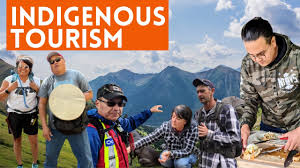
When you think of Canada, images of snowy mountains, maple syrup, and hockey might come to mind. But there is a deeper, richer story woven into this land—one that stretches back thousands of years. This is the story of the Indigenous peoples: First Nations, Métis, and Inuit. For travelers seeking more than just a photo opportunity, Indigenous tourism offers a profound way to connect with this living history, to listen, learn, and be transformed by the original cultures of this vast territory.
This isn’t about watching a performance from a distance. It’s about stepping into a story, shared by the people who have been its authors for millennia. It’s a chance to replace stereotypes with real human connections and to see Canada through a brand new, ancient pair of eyes.
More Than a Visit: It’s a Relationship
Before we explore the incredible experiences available, it’s important to understand the heart of Indigenous tourism. This is founded on a concept called “Etuaptmumk” in Mi’kmaw, or “Two-Eyed Seeing.” It means learning to see the world with the strengths of Indigenous knowledge in one eye, and the strengths of Western knowledge in the other.
When you participate in an Indigenous-led tour, you are not just a tourist. You are a guest. You are engaging in a respectful relationship, one that honors traditions, supports local communities directly, and helps ensure these vital cultures thrive for generations to come. It’s travel that has a purpose.
Unforgettable Experiences from Coast to Coast to Coast
Across Canada, Indigenous communities are welcoming visitors to share their world. Here are just a few of the powerful experiences that await you.
On the West Coast, in the traditional territories of the Haida people, a journey to Haida Gwaii is a pilgrimage. Often called the “Galapagos of the North,” these misty islands are home to the Haida Watchmen. You can take a guided tour to places like SGang Gwaay, a UNESCO World Heritage site, where ancient mortuary poles stand against the relentless Pacific winds. It’s a hauntingly beautiful place where you can feel the presence of ancestors and hear stories of the Raven and the Eagle directly from Haida guardians.
Traveling inland to the mountains of Alberta and British Columbia, you can join a warrior tour. Led by members of the Stoney Nakoda or Ktunaxa Nations, these guided walks through the Rockies are not just about geology and wildlife. They are about the deep spiritual connection to the land. You’ll learn how to identify medicinal plants, hear ancient legends connected to the towering peaks, and understand the land not as a resource, but as a relative.
In the heart of the prairies, the Métis culture comes alive. The Métis are a distinct people of mixed Indigenous and European ancestry, known as the “Flower Beadwork People” and the founders of the Manitoba province. At cultural centers like the Batoche National Historic Site in Saskatchewan or through experiences in Winnipeg, you can learn to jig to the lively rhythms of a fiddle, hear stories of the bison hunt, and understand the resilience of the Red River Cart.
Journeying to the Great Lakes region, the Great Spirit Circle Trail on Manitoulin Island in Ontario offers a holistic introduction to Anishinaabe culture. You can stay in a traditional lodge, participate in a sacred smudging ceremony, and listen to elders share teachings under a star-filled sky. It’s a place for quiet reflection and deep learning.
Finally, a trip to Canada is not complete without understanding the Arctic. In Nunavut, companies like Polar Outfitting in Iqaluit offer Inuit-led experiences. This is where you can go dog-sledding across the sea ice, learn about the vital role of the narwhal and seal in Inuit life, and witness the stunning artistry of soapstone carving. The resilience, humor, and profound knowledge of the Inuit people will change your perception of the North forever.
How to Be a Good Guest: A Simple Guide
Approaching Indigenous tourism with respect is key. Here are a few guiding principles.
Do your research beforehand. Understand that there is no single “Indigenous culture.” Canada is home to over 600 distinct First Nations communities, plus the Métis and Inuit, each with their own unique languages, traditions, and histories.
Always remember that you are a visitor on someone’s ancestral land. A simple way to acknowledge this is to learn whose traditional territory you are on. You can easily find this information online.
Book your experiences directly with Indigenous-owned and operated businesses. This ensures that your financial support goes straight to the community. Look for the authentic Indigenous ownership.
Listen more than you speak. You are there to learn. Ask thoughtful questions, but avoid intrusive personal questions. Always ask for permission before taking photos of people, their homes, or sacred objects.
Be open to a different pace and way of seeing the world. This journey is not about rushing from one site to the next. It’s about connection, story, and spirit.
Your adventure into Indigenous Canada is more than a trip. It’s an opportunity to be part of a story of resilience, celebration, and shared humanity. It’s a chance to return home with not just souvenirs, but with a new understanding of this land and its first peoples.
Conclusion
A trip centered on Indigenous experiences offers something rare in modern travel: a sense of true connection. You won’t just leave with photos of beautiful places; you’ll leave with stories, new understandings, and a feeling for the deep, living spirit of this land. The knowledge shared by an Inuit guide about reading the ice, the sound of a drum circle on a quiet night in the forest, the taste of bannock cooked over an open fire—these are the moments that reshape your perspective.
This journey challenges us to move beyond being mere spectators. It invites us to be guests, listeners, and learners. It’s a powerful reminder that the most breathtaking landscapes are also homelands, rich with history, language, and tradition. By choosing to travel this way, you become part of a positive story of cultural preservation and mutual respect. You carry a piece of that story with you long after you’ve returned home, forever enriching your understanding of what Canada truly is.
Your Questions About Indigenous Tourism, Answered
It’s completely normal to have questions before embarking on a cultural journey. Here are some honest answers to help you feel prepared and respectful.
I want to be respectful, but I’m worried about saying or doing the wrong thing. What’s the most important rule?
The very fact that you’re asking this question is a great start! The single most important rule is to come as a listener and a learner, not just a tourist. Be observant, be humble, and follow the lead of your guides. It’s always better to ask a thoughtful question than to assume you know something. Your genuine curiosity and respectful demeanor will be appreciated more than you know.
What is the difference between First Nations, Métis, and Inuit?
This is a fundamental question. These are the three distinct Indigenous peoples recognized by the Canadian constitution.
- First Nations refers to the many diverse societies and cultures, often with their own unique languages, who have lived across the land that is now Canada for thousands of years.
- Métis people are of mixed First Nations and European (primarily French and Scottish) ancestry and have a unique culture, language (Michif), and history, originating primarily in the Red River Valley in Manitoba.
- Inuit are the Indigenous people of the Arctic regions of Canada, Alaska, Greenland, and Siberia. Their culture and ways of life are intimately tied to the northern environment.
It’s important to remember that “Aboriginal” or “Native” are generally less specific, and using the specific name of a Nation or community (like Haida, Cree, or Mi’kmaq) is always best when you know it.
Is it okay to take photographs during my visit?
This depends entirely on the context, so always ask for permission first. In public spaces and of landscapes, it’s usually fine. However, when it comes to photographing people, cultural ceremonies, homes, or certain artifacts, you must always ask your guide or the individual directly. Some aspects of culture are sacred and not intended for photography. When in doubt, ask.
How can I be sure my money is actually supporting the Indigenous community?
The best way to ensure this is to book experiences and buy art directly from Indigenous-owned and operated businesses. Look for websites and marketing materials that clearly state Indigenous ownership or partnership. Look for affiliations with organizations like the Indigenous Tourism Association of Canada (ITAC), which has a rigorous certification process. Buying a piece of art directly from the artist at a community market, for instance, guarantees your support goes to them.
What should I do if I don’t know the name of the traditional territory I’m visiting?
A simple online search can help! Try searching “Whose traditional territory is [city or town name]?” This is a common and respectful practice, and many official tourism websites now include this information. Acknowledging the land you are on at the beginning of a gathering or even in your own reflections is a powerful way to show respect.