

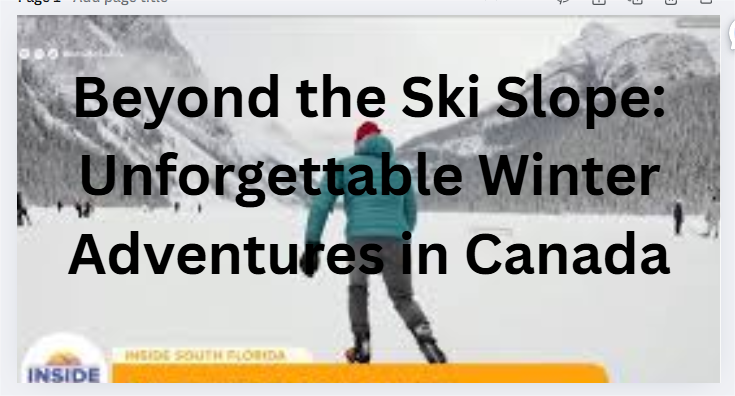
When you picture a Canadian winter, your mind might immediately go to downhill skiing or cozying up by a fire. But for those with a spirit of adventure, the cold months unlock a world of experiences that are far more unique and magical. Canada transforms into a pristine playground for activities that let you truly connect with the raw, beautiful power of the season.
If you’re ready to trade the ordinary for the extraordinary, here’s a guide to some of the most unforgettable winter activities Canada has to offer.
The Thrill of the Run: Dog Sledding
There are few things that feel more authentically Canadian than mushing your own team of happy, barking huskies through a silent, snow-covered forest. Dog sledding, or mushing, is more than just a ride; it’s a partnership with these incredible athletes.
You’ll find dog sledding operations from the Rockies in Alberta to the vast wilderness of Quebec. The experience often starts with learning the basic commands—”Hike!” to go and “Whoa!” to stop. As the dogs surge forward, the only sounds are the swish of the sled runners and the panting of the team. It’s a pulse-quickening, joyful adventure that gives you a profound respect for this ancient mode of transport. Many outfitters offer everything from short one-hour runs to multi-day expeditions where you learn to care for the dogs and camp under the stars.
Walking Through Frozen Time: Canyon Ice Walks
Imagine walking through a majestic canyon, where summer’s powerful waterfalls are now frozen in place, creating a glittering cathedral of ice. This is exactly what you can experience in places like Maligne Canyon in Jasper National Park.
Guided ice walks are a surprisingly accessible activity. You’ll be outfitted with crampons (metal spikes that attach to your boots) and a helmet. Following your guide, you’ll descend into the canyon, wandering past frozen waterfalls and turquoise pools that are visible through the clear ice. You’ll squeeze through narrow passages carved by water over millennia, now silent and still. It’s not a strenuous hike, but a mesmerizing walk through a landscape that feels otherworldly and profoundly peaceful.
The Quiet Glide: Snowshoeing Under the Stars
Snowshoeing is the winter equivalent of a pleasant nature hike, but with a magical twist. It allows you to go where skiers can’t, breaking trail through deep, powdery snow in the heart of the forest. It’s incredibly easy to learn—if you can walk, you can snowshoe.
The real magic happens when you go on a guided evening snowshoe walk. With the forest blanketed in silence, and the only light coming from your headlamp or the full moon, the experience is incredibly serene. Some tours, like those in places like Whistler or Banff, even end with a fondue dinner or hot chocolate by a campfire. It’s a perfect way to experience the quiet majesty of the Canadian wilderness.
Soaking in the Scenery: Hot Springs under the Snow
After a day of chilly adventures, there is no better way to warm up than by soaking in a natural hot spring while snowflakes drift down around you. The contrast of the steaming mineral water against the crisp winter air is a sensory delight you won’t forget.
The Banff Upper Hot Springs in Alberta is the most famous example, offering stunning views of the surrounding mountain peaks. For a more rustic experience, the Radium Hot Springs in British Columbia is nestled within the dramatic Sinclair Canyon. Sitting back in the warm, therapeutic waters while your breath mists in the cold air is the definition of winter wellness.
Chasing the Sky: The Northern Lights
For many, witnessing the Aurora Borealis is a bucket-list dream. Canada’s northern territories—the Yukon, Northwest Territories, and Nunavut—are some of the best places on Earth to see this celestial dance.
Towns like Whitehorse, YT, and Yellowknife, NWT, offer a high probability of sightings on clear, dark nights. You can join guided tours that take you away from city lights to dedicated aurora-viewing lodges, where you can wait in warmth and comfort. Seeing those green and purple ribbons shimmer and swirl across the vast, starry sky is a humbling and almost spiritual experience that will stay with you forever.
Embracing the Cold
The secret to enjoying these activities is simple: dress for it. Layering is your best friend. Start with a moisture-wicking base layer, add an insulating middle layer like fleece or wool, and finish with a waterproof and windproof outer shell. Don’t forget a warm hat, gloves, and insulated, waterproof boots.
Canada’s winter is not a season to be endured; it’s a season to be celebrated. It’s a time to hear the excited yips of a sled dog team, to walk behind a frozen waterfall, and to soak in a hot spring under a blanket of stars. So, bundle up and step outside. An incredible adventure is waiting.
Your Winter Story Awaits
The true magic of a Canadian winter isn’t found by watching it from a window. It’s felt in the crisp air that fills your lungs, heard in the quiet of a snow-laden forest, and seen in the dazzling dance of the northern lights. These unique activities—from the joyful teamwork of dog sledding to the awe-inspiring walks through frozen canyons—are more than just items on a checklist. They are invitations to connect with the season in a profound and personal way.
It’s about trading comfort for wonder and discovering that the coldest temperatures often create the warmest memories. So, layer up, embrace the adventure, and go out and write your own unforgettable Canadian winter story.
Frequent Ask Questions
I’m not very athletic. Can I still enjoy these activities?
Absolutely. Activities like ice walks and snowshoeing are suitable for most fitness levels. The ice walks are guided at a gentle pace, and snowshoeing is essentially just walking. Dog sledding often allows you to ride as a passenger while the guide does the mushing.
What is the best time of winter to go?
For the best snow conditions and deepest winter experience, aim for January and February. For seeing the Northern Lights, the prime viewing season is from late August to early April, with the darkest skies in December and January offering the most dramatic displays.
Is dog sledding ethical?
It’s a crucial question. Reputable operators prioritize the health and happiness of their dogs. Look for companies that are transparent about their animal welfare practices, where the dogs appear healthy, energetic, and well-cared for, with adequate shelter and rest periods.
How cold does it really get?
It varies hugely across the country. In the Rockies and the territories, temperatures can easily drop to -20°C or -30°C. On the coast, like in Vancouver, it can be a much milder, rainy winter around 0°C. Always check the forecast for your specific destination and pack accordingly.
What should I look for in a winter boot?
The most important features are insulation (look for a temperature rating) and a waterproof exterior. A good grip on the sole is also essential for walking on icy paths. Your everyday fashion boots won’t be enough for a full day out in the elements.