

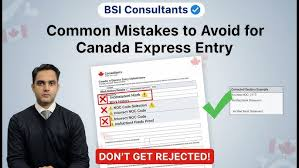
You have spent months calculating your CRS score, gathering documents, and waiting for that invitation. Then, finally, it arrives. You have sixty days to submit your application. The pressure is on, and this is exactly when mistakes happen. I have seen too many qualified candidates face delays or refusals not because they lacked skills, but because they made preventable errors in their applications.
The Mistake That Leads to Immediate Refusal
Misrepresentation is the single most serious error you can make. It does not matter if it was accidental or intentional. If IRCC determines that you misrepresented any fact in your application, you can receive a five-year ban from applying to enter or remain in Canada.
This includes claiming work experience you did not have, inflating language scores, or hiding a criminal record. It also includes smaller things like providing incorrect dates of employment or failing to declare a family member. Even if the mistake seems minor, the consequences are severe. If you are unsure about something, research it. If you cannot prove it, do not claim it. Honesty is not just ethical, it is strategic.
Rushing to Create Your Profile
Many candidates are so eager to enter the pool that they create their Express Entry profile before they have their documents ready. They estimate their language scores, guess at their work experience dates, and submit incomplete information. Then, when they receive an invitation, they panic because their actual test scores are lower than estimated or their reference letters do not match what they claimed.
The smarter approach is to prepare everything first. Take your language tests. Get your Educational Credential Assessment. Gather your reference letters. Then create your profile. Your profile should reflect reality, not aspirations. Being in the pool a few weeks earlier is not worth the risk of errors.
Mismatched Job Duties
Here is the most common documentation mistake I see. Your job title does not matter to IRCC. Your job duties do. You can claim to be a software engineer, but if your reference letter describes IT support duties, your application will face serious problems.
Your reference letter must detail your specific responsibilities in a way that matches the National Occupational Classification description for your claimed occupation. If the NOC says your occupation involves designing software, your letter must mention designing software. Generic letters that just say you were a manager or a technician will not work. Be specific. Ask your employer to list your actual duties, not just your title.
Incomplete or Missing Police Certificates
Police certificates are required from every country where you have lived for six months or more since turning eighteen. This includes your home country and any other countries where you have studied or worked. Many applicants forget countries where they lived briefly or assume that because they have not been back in years, they do not need a certificate.
You need a certificate for each country regardless of how long ago you lived there. The only exception is if the country will not issue certificates for periods more than a certain number of years in the past. In that case, you need to explain and provide evidence of your attempts to obtain one. Start this process early. Some countries take months to issue police certificates.
Letting Documents Expire
Your language test results are valid for two years. Your Educational Credential Assessment is valid for five years. Your police certificates are typically valid for one year. Your medical exam results are valid for twelve months. If any of these documents expire while your application is processing, you will need to obtain new ones.
This is a preventable delay. Mark expiration dates on your calendar. If you are still in the pool after eighteen months, retake your language test before it expires. If your police certificate is approaching one year and your application is still pending, order a new one proactively. Do not wait for IRCC to request it.
Proof of Funds Errors
You must show that you have enough money to support yourself and your family when you arrive in Canada. The amount depends on your family size. Many applicants make two common mistakes here. First, they do not realize that the funds must be readily available. Money locked in real estate or investments that cannot be quickly accessed does not count.
Second, they do not show that the money has been in their account for a reasonable period. If you suddenly deposit a large sum right before your application, IRCC will wonder where it came from. You need bank statements showing the average balance over the past six months. If you are borrowing money from family, you need to prove it is a gift, not a loan that you will have to repay.
Incomplete Family Information
You must declare all your family members in your application, even if they are not accompanying you to Canada. This includes your spouse or common-law partner and all your dependent children. Some applicants think that if their spouse is not immigrating with them, they do not need to mention them. This is misrepresentation.
Failing to declare a family member can lead to refusal and a ban. Even if you are separated from your spouse, you must declare them. Even if your children live with their other parent, you must declare them. Be complete and honest about your family situation.
Ignoring Provincial Nominee Programs
Many candidates focus exclusively on federal Express Entry draws. They wait month after month with a CRS score in the 450s, hoping for a miracle draw. Meanwhile, provinces are issuing nominations that would add six hundred points to their scores.
If your score is below 500, you should be researching provincial nominee programs. Saskatchewan, Alberta, Ontario, and Manitoba all have streams that could be a perfect fit for your profile. Do not put all your eggs in the federal basket. Explore your provincial options while you wait.
Not Updating Your Profile
Your Express Entry profile is not static. As you gain more work experience, your points increase. When you cross the one-year, two-year, or three-year thresholds, update your profile. If you retake your language test and achieve higher scores, update your profile. If you receive a provincial nomination, update your profile.
Candidates who set and forget their profiles miss opportunities. A higher score today could mean an invitation in the next draw. Keep your profile current and accurate.
The Sixty-Day Scramble
When you receive an Invitation to Apply, you have sixty days to submit your complete application. This sounds like plenty of time, but gathering documents from multiple countries, getting police certificates, and completing medical exams can take weeks.
Candidates who prepared while waiting in the pool have an easy sixty days. Candidates who waited until receiving their invitation face a stressful scramble. Be the first type of candidate. Have your documents ready before you are invited. The sixty days should be for final review, not for starting from scratch.
Ignoring the Country-Specific Requirements
Different countries have different requirements for police certificates, document legalization, and translations. What works for one applicant may not work for another. IRCC provides country-specific instructions on their website. Read them carefully.
If your documents are not in English or French, you need certified translations. You cannot translate documents yourself. Use professional translation services. If your country requires documents to be notarized or legalized, follow those requirements exactly.
Final Thoughts
Express Entry is a demanding but navigable system. The candidates who succeed are not necessarily the ones with the highest scores. They are the ones who pay attention to details, prepare thoroughly, and avoid preventable mistakes.
Take your time. Read instructions carefully. Double-check every document before you submit. If something seems unclear, research it until you understand. A few extra hours of preparation now can save you months of delays or the heartbreak of refusal later.
Frequently Asked Questions About Common Mistakes in Express Entry Applications
What is the most common mistake that leads to refusal?
Misrepresentation is the most serious and most common error leading to refusal. This includes claiming work experience you do not have, inflating language scores, hiding a criminal record, or failing to declare a family member. Even accidental misrepresentation can result in a five-year ban from applying to enter or remain in Canada.
The key is honesty and accuracy. If you are unsure about something, research it. If you cannot prove it, do not claim it. Small mistakes like incorrect employment dates can be corrected, but deliberate misrepresentation has severe consequences.
How do I know if my job duties match the NOC?
This is the most common documentation mistake. IRCC does not care about your job title. They care about your job duties. Your reference letter must detail your specific responsibilities in a way that matches the National Occupational Classification description for your claimed occupation.
Read the NOC description carefully. If it says your occupation involves designing software, your letter must mention designing software. If it says you supervise other workers, your letter must describe your supervisory duties. Generic letters that just list your title will cause problems. Ask your employer to be specific about what you actually did.
What happens if my language test expires while I am waiting?
Your language test results are valid for two years. If they expire while you are in the Express Entry pool, your profile becomes invalid. You will need to retake the test and update your profile with the new scores.
This is a preventable delay. Mark your test expiration date on your calendar. If you are still in the pool after eighteen months, retake the test before it expires. Do not wait until the last minute. Test dates book up weeks or months in advance.
Do I really need police certificates from every country?
Yes, you need police certificates from every country where you have lived for six months or more since turning eighteen. This includes your home country and any other countries where you have studied or worked.
Many applicants forget countries where they lived briefly or assume that because they have not been back in years, they do not need a certificate. You need a certificate for each country regardless of how long ago you lived there. The only exception is if the country will not issue certificates for periods more than a certain number of years in the past. Start this process early. Some countries take months to issue police certificates.
What is the biggest proof of funds mistake?
The two biggest mistakes are not understanding that funds must be readily available and not showing the money has been in your account for a reasonable period.
Money locked in real estate or investments that cannot be quickly accessed does not count. You need bank statements showing the average balance over the past six months. If you suddenly deposit a large sum right before your application, IRCC will question where it came from. If you are borrowing money from family, you need a gift deed proving it is a gift, not a loan that you will have to repay.
Can I apply if I am separated from my spouse?
Yes, but you must declare your spouse even if you are separated. Failing to declare a family member is misrepresentation and can lead to refusal and a ban. You must declare your spouse or common-law partner and all your dependent children, even if they are not accompanying you to Canada.
If your spouse is not immigrating with you, you need to explain why and provide proof of your separation or divorce if applicable. Be complete and honest about your family situation.