

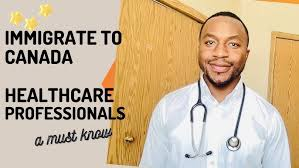
So, you’re a healthcare professional dreaming of a new life in Canada. You’ve heard the country needs nurses, doctors, and therapists, and you’re ready to answer the call. It sounds like a perfect match, right? But the path from your home country to working in a Canadian clinic or hospital isn’t always a straight line. It involves two big, parallel journeys: one to become a permanent resident, and another to become licensed to practice. Let’s break down how Express Entry fits into this picture, without the sugar-coating or the confusing legal-speak.
First, The Hard Truth About Licensing
This is the most important thing to understand upfront: Getting permanent residency (PR) through Express Entry is not the same as getting a license to practice. They are separate processes run by different organizations.
- Express Entry is run by the federal government (Immigration, Refugees and Citizenship Canada, or IRCC). It assesses you as a potential resident based on your age, education, work experience, and language skills.
- Your Professional License is managed by a provincial or territorial regulatory body. For nurses, it’s the provincial college of nurses (like the College of Nurses of Ontario). For doctors, it’s the provincial college of physicians and surgeons. For physiotherapists, medical lab technologists, and others, there are specific colleges for each profession.
You can be approved for PR long before you are fully licensed to work in your field in Canada. This means you need a financial plan for the “in-between” time when you are a resident but may still be completing exams, supervised practice hours, or language requirements for your license.
How Express Entry Works for You: It’s All About Your Profile
Express Entry is a points-based system called the Comprehensive Ranking System (CRS). As a healthcare worker, you have some powerful advantages. Here’s how to make the most of them:
Step 1: Figure Out If Your Job is on the List
Your occupation must be classified under a specific National Occupational Classification (NOC) TEER category. Thankfully, many healthcare jobs are in high demand. Key examples include:
- Nurses (NOC 31301)
- General practitioners and family physicians (NOC 31102)
- Specialists (NOC 31101)
- Medical laboratory technologists (NOC 32120)
- Physiotherapists (NOC 31202)
- Medical sonographers (NOC 32109)
Step 2: The Non-Negotiable Essentials
To even create an Express Entry profile, you must have:
- At least one year of continuous, full-time (or equivalent part-time) skilled work experience in your healthcare field, within the last ten years.
- A completed Educational Credential Assessment (ECA). This is a report from an organization like World Education Services (WES) that proves your foreign degree, diploma, or certificate is equal to a Canadian one. This is crucial for your points.
- Valid language test results from an approved test like IELTS or CELPIP for English. You need to meet a minimum threshold (usually CLB 7), but aim for CLB 9 or 10. High language scores are the single best way to boost your points.
Step 3: Create Your Profile and Get Your Score
Once you have all the documents, you create your profile online. You’ll receive a CRS score. The government holds regular draws and invites the highest-scoring candidates to apply for permanent residence.
Your Secret Weapon: Provincial Nominee Programs (PNPs)
For many healthcare professionals, the Express Entry score required in federal draws can feel out of reach. This is where Provincial Nominee Programs (PNPs) become your best friend.
Provinces like Ontario, British Columbia, Saskatchewan, and Nova Scotia have specific immigration streams targeted directly at healthcare workers. They search the Express Entry pool for people with your exact professional background and invite them to apply for a provincial nomination.
If a province nominates you, you get 600 extra points added to your Express Entry score. This virtually guarantees you will receive an Invitation to Apply (ITA) for PR in the next federal draw. Many of these “enhanced” PNP streams are designed specifically for people who are not yet fully licensed but are in the process. They want you to come and complete your licensing in their province.
Action Plan: Your Roadmap to Getting Started
- Research Your Licensing Body First. Before you spend a dime on immigration, google “[Your Profession] licensing in [Province you’re interested in], Canada.” Find the official college website. Read their requirements for internationally trained professionals. Understand the steps, costs, and timeline. This reality check is essential.
- Get Your Language Test Done. Book your IELTS or CELPIP exam. Don’t wait. High scores are critical for both Express Entry and for your eventual license (health professionals often need higher language benchmarks).
- Start Your Educational Credential Assessment (ECA). Begin the process with WES or the designated body for your profession. It can take months to gather documents and get the report.
- Create an Express Entry Profile. With your ECA and language results, create your profile. Be accurate and honest. You are now in the pool.
- Register with Provincial Registries. Some provinces, like Ontario and British Columbia, have special “Expression of Interest” systems for healthcare workers. Registering in these can put you directly on a province’s radar for a nomination.
Living in the “In-Between”: A Realistic Mindset
You must prepare for the possibility of arriving in Canada as a permanent resident but not being able to work in your dream hospital job immediately. Many professionals work in related or support roles in healthcare while finishing their licensing exams and requirements. This period requires patience, resilience, and financial planning.
Final Thought: A Journey Worth Taking
The demand for your skills in Canada is real and pressing. While the dual-path system (immigration + licensing) is complex, it is navigable with careful planning. By understanding that Express Entry is your ticket to permanent residency—and that your provincial college holds the key to your professional practice—you can tackle both journeys with clear eyes.
Start with your licensing body’s website today. Let that information guide your immigration strategy. Your expertise is needed, and with a determined, step-by-step approach, you can build a rewarding life and career serving communities in Canada.
Frequently Asked Questions: Healthcare Professionals Moving to Canada
The path to Canada for doctors, nurses, and other health professionals brings up a lot of the same good, practical questions. Here are honest answers based on the real process.
Do I need a job offer to immigrate as a healthcare worker?
Not necessarily. Many healthcare professionals are selected directly from the Express Entry pool based on their high scores, especially through Provincial Nominee Program (PNP) draws that target your occupation. However, a valid job offer from a Canadian employer will give you a significant points boost (50 or 200 points depending on the job’s level) and can make you a very strong candidate. For some specific PNP streams, an offer may be required.
I’m a doctor/specialist. Is the process different for me?
The immigration process via Express Entry is the same. The major difference is in licensing, which is exceptionally rigorous for physicians. You will almost certainly need to complete a period of supervised practice or pass challenging qualifying exams through the Medical Council of Canada before being licensed to practice independently. Many provinces have PNP streams specifically for physicians, often requiring you to have already started the licensing process or secured a position with a provincial health authority.
How long does the licensing process take for nurses?
It varies by province and your individual background, but you should prepare for it to take one to two years from start to finish. Steps include applying to the provincial college, completing a competency assessment, potentially taking additional courses or exams (like the NCLEX-RN for Registered Nurses), and completing a period of supervised practice. You can begin many of these steps from your home country. The key is to contact the College of Nurses in your desired province the same day you start thinking about immigration.
Will my foreign work experience count for Express Entry?
Yes, absolutely. You need at least one year of continuous, full-time (or equivalent part-time) skilled work experience in your healthcare occupation to qualify for Express Entry. This experience must be within the last ten years. This foreign experience is what makes you eligible and earns you core points. Make sure your reference letters from employers match the duties listed for your NOC code.
What is the minimum language score I need?
For Express Entry, the minimum is usually Canadian Language Benchmark (CLB) 7, which is roughly an IELTS score of 6.0 in each band. But this is a trap. To be competitive in the Express Entry pool and, more importantly, to meet professional licensing standards, you need much higher scores. Most provincial regulatory colleges require a minimum of CLB 7 or 8 for licensure, and some (like for nurses) often require CLB 9 or higher in speaking and listening. Aim for CLB 9 (IELTS 7.0 in listening, 7.0 in reading, 7.0 in writing, and 7.0 in speaking) from the start.
Can I apply for Express Entry before starting the licensing process?
Yes, and most people do. You can—and should—get into the Express Entry pool as soon as you have your language test results and Educational Credential Assessment (ECA). Gaining permanent residency first gives you the flexibility to be in Canada while you complete the sometimes lengthy and expensive licensing steps. Just go into it with your eyes open: you are immigrating as a skilled worker in a healthcare occupation, not yet as a licensed practitioner.
What’s the fastest way for a healthcare worker to get to Canada?
For most, the fastest track is a combination of:
- Excelling in your language tests (CLB 9+).
- Getting into the Express Entry pool.
- Being targeted by a Provincial Nominee Program (PNP) healthcare draw.
A provincial nomination adds 600 points to your score, guaranteeing you an invitation for permanent residency. Provinces like Ontario, BC, and Nova Scotia regularly hold these targeted draws for healthcare professionals.
Are there financial costs I should know about?
Yes, and they are substantial. Budget for: language tests ($300+), Educational Credential Assessment ($200+), Express Entry application fees ($1,365 for a couple), right of permanent residence fee ($515 per adult), plus the often much larger costs of licensing: application fees to the college, exam fees (which can be thousands of dollars), possible bridging programs, and living expenses if you cannot work in your field immediately.