

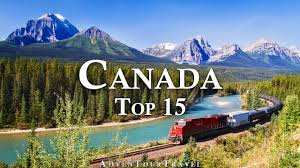
Let’s be honest, when you picture a Canadian vacation, a certain massive waterfall probably comes to mind first. And while Niagara Falls is undoubtedly spectacular, it’s just the tip of the iceberg when it comes to this country’s mind-blowing beauty. Canada is a land of quiet wonders, raw wilderness, and colourful cities that often get overlooked.
If you’re ready to explore the Canada that locals know and love, pack your sense of adventure. We’re leaving the well-trodden path to discover 15 incredible places that prove this country has so much more to offer.
The Wild West Coast
Start your journey on Canada’s dramatic Pacific edge, where ocean meets ancient rainforest.
Pacific Rim National Park, British Columbia
Imagine walking on a long, windswept beach where the only footprints might be yours and those of a passing wolf. This is the raw, untamed spirit of Vancouver Island. The park is famous for the West Coast Trail, a multi-day trek for serious hikers, but you can also enjoy shorter walks through moss-draped forests and storm-watch in Tofino during the winter. The energy here is powerful and primal.
The Canadian Rockies’ Hidden Gems
Everyone heads to Banff and Lake Louise, but the beauty of the Rockies extends far beyond.
Yoho National Park, British Columbia
Yoho is a Cree word for “awe,” and that’s exactly what you’ll feel. Just over the border from Banff in BC, this park is home to the stunning Takakkaw Falls (one of Canada’s tallest waterfalls) and the breathtaking Emerald Lake, whose colour has to be seen to be believed. It’s every bit as beautiful as Lake Louise but often feels more peaceful.
Berg Lake Trail, Mount Robson, British Columbia
For the avid hiker, this is a pilgrimage. The trail to Berg Lake sits in the shadow of Mount Robson, the highest peak in the Canadian Rockies. The views of the glacier calving into the turquoise lake are simply unforgettable. You’ll need to plan ahead, as campsites book up months in advance, but the effort is worth it.
The Vast Canadian Prairies & Shield
The heart of Canada is filled with shimmering lakes, golden fields, and unique landscapes.
Churchill, Manitoba
Ready for an unforgettable adventure? Churchill is the “Polar Bear Capital of the World.” From October to November, you can ride in a specially designed Tundra Buggy to see these magnificent creatures in their natural habitat. But that’s not all; in summer, the Hudson Bay comes alive with thousands of beluga whales, creating a truly magical experience.
The Grotto, Bruce Peninsula National Park, Ontario
Forget the Caribbean—some of the most stunning turquoise waters are in Ontario. The Grotto is a sea cave on the Bruce Peninsula where sunlight filters through the underwater entrance, making the water glow an impossible shade of blue. The hike in is beautiful, but securing a parking pass in advance is essential during peak season.
Wanuskewin Heritage Park, Saskatchewan
For a profound cultural experience, visit Wanuskewin, which is on track to become a UNESCO World Heritage Site. This site north of Saskatoon has been a gathering place for Northern Plains Indigenous peoples for over 6,000 years. Walking the trails, you can feel the deep history and learn about the traditions that have shaped this land.
The Quirky & Cultural East
Atlantic Canada is famous for its friendly people, colourful villages, and rugged coastlines.
Lunenburg, Nova Scotia
This is a postcard come to life. A UNESCO World Heritage site, Old Town Lunenburg is a brilliantly preserved example of a British colonial settlement. Its colourful, waterfront buildings and the iconic Bluenose II schooner make it one of the most charming and photogenic towns in all of Canada.
Perce Rock, Quebec
Jutting out of the Gulf of St. Lawrence, this massive limestone rock with a dramatic hole pierced through it is a natural marvel. Located in the Gaspé Peninsula, you can take a boat tour to see it up close, along with the nearby Bonaventure Island, which is home to one of the largest bird sanctuaries in the world.
St. John’s, Newfoundland & Labrador
As one of North America’s oldest cities, St. John’s is bursting with character. The jellybean-coloured row houses are a joy to behold. Signal Hill offers incredible views, but the real magic is in the air—a mix of salty sea breeze, lively pub music, and the city’s famously warm and welcoming spirit.
The Untamed North
For the ultimate wilderness escape, you have to look to the territories.
Dempster Highway, Yukon & Northwest Territories
This is not just a road; it’s an epic journey. The Dempster Highway is a rough, gravel road that takes you all the way to the Arctic Ocean in the Northwest Territories. It’s a trip of a lifetime, traversing vast tundra, crossing the Arctic Circle, and offering a true sense of isolation and adventure.
Auyuittuq National Park, Nunavut
For the truly intrepid explorer, Auyuittuq (meaning “the land that never melts”) offers a stark and powerful landscape of glaciers, jagged peaks, and deep fjords. Hiking the Akshayuk Pass is a challenging but rewarding way to experience the raw power of the Arctic.
A Few More For Your List
No list can be complete, but these spots are too good to leave out.
- The Cabot Trail, Nova Scotia: Often ranked one of the world’s most beautiful road trips.
- Dinosaur Provincial Park, Alberta: A UNESCO site where you can walk among real dinosaur fossils.
- Fathom Five National Marine Park, Ontario: Home to ancient shipwrecks and the iconic Flowerpot Island.
Canada’s true character isn’t found in a single spot; it’s in the vast, wild, and wonderfully diverse landscapes that stretch from coast to coast to coast. So go beyond the famous falls and discover the soul of this incredible country for yourself.
Discovering Canada’s True Spirit
As you can see, the story of Canada is so much bigger than one single waterfall. It’s a story written in the turquoise glow of a hidden grotto, the silent power of a polar bear on the tundra, and the salty air of a colourful fishing village. These 15 places are just the beginning—a invitation to look past the postcard and discover the profound and diverse beauty that makes this country so special.
The real magic of a Canadian adventure lies in the feeling of awe you get standing before an ancient glacier, the warmth of a local conversation in a maritime pub, and the sheer scale of the wilderness that makes you feel wonderfully small. So pack your bags for the places the locals love, hit the open road, and get ready to find your own unforgettable Canadian moment. Your adventure beyond the falls is waiting.
Your Canada Travel Questions, Answered
Planning a trip to a country as big as Canada can bring up a lot of questions. Here are straightforward answers to some of the most common ones.
What is the best time of year to visit Canada?
This truly depends on what you want to do. For hiking, sightseeing, and comfortable city exploration, the summer months (June to August) and early fall (September) are ideal. For winter sports like skiing and to experience a true Canadian winter, aim for December to February. If you want to see the stunning fall colours, late September to October is your window.
Do I need a visa to visit Canada?
This depends on your nationality. Travelers from many countries, including the United States, do not need a visa for short visits. However, most will need an Electronic Travel Authorization (eTA). It’s crucial to check the official Government of Canada website well in advance of your trip to confirm the specific requirements for your passport.
How do I get around such a big country?
For long distances between major cities like Vancouver to Calgary or Toronto to Montreal, domestic flights are often the most practical option. For shorter, scenic routes like the drive from Calgary to Banff or the Cabot Trail in Nova Scotia, renting a car gives you the most freedom. Canada’s VIA Rail network is also an option for a unique, scenic travel experience, though it can be slower.
Is it safe to see bears and other wildlife?
Generally, yes, but with caution. Always view wildlife from a safe and respectful distance. Never approach or feed an animal. When hiking in bear country, such as the Rockies or coastal trails, it’s wise to travel in groups, make noise, and carry bear spray—and know how to use it. The animals are wild, and we are visitors in their home.
What should I pack for a trip to Canada?
The key is layers! Weather can change quickly, especially in the mountains. Even in summer, pack a warm sweater and a waterproof jacket. The most important item you’ll bring is a pair of comfortable, broken-in walking shoes or hiking boots. And don’t forget sunscreen and insect repellent for the summer months.