

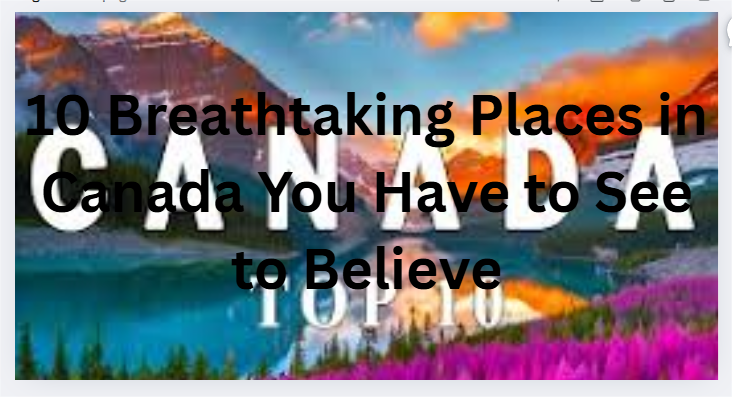
Canada. The very name conjures images of vast, untamed wilderness, friendly cities, and landscapes that seem too dramatic to be real. Spanning from the Atlantic to the Pacific to the Arctic Ocean, this country is a treasure trove of natural wonders that can leave even the most seasoned traveler speechless.
But with so much to see, where do you even begin? We’ve gone beyond the typical postcard scenes to bring you a list of ten truly breathtaking places that will make you believe in magic. These are the spots that photos can never fully capture—you simply have to be there.
The Turquoise Jewel of the Rockies
Let’s start in the iconic Canadian Rockies. While Banff and Lake Louise are famous for a reason, there’s a gem that often steals the show for those in the know: Moraine Lake.
Nestated in the Valley of the Ten Peaks, its water isn’t just blue; it’s a surreal, almost electric shade of turquoise. This incredible color comes from rock flour—fine particles of glacial silt that reflect the light. Canoeing on this lake, surrounded by towering, snow-dusted peaks, is an experience that feels more like a dream than a vacation. Just remember, the road to Moraine Lake is now closed to personal vehicles for most of the year to protect the fragile ecosystem, so you’ll need to book a shuttle.
A Canyon Carved in Stone
British Columbia’s interior holds a secret that feels worlds away from the coastal rainforests. The Chilcotin Plateau is home to the stunning Chasm Provincial Park. As you approach, the land seems to open up abruptly. What you find is a yawning canyon, over half a kilometer wide and 300 meters deep.
The colorful layers of rock tell a geological story millions of years in the making. It looks less like a natural formation and more like the work of a giant’s paintbrush. The sheer scale and the vibrant, striped walls are humbling and unforgettable.
Where the Earth Meets the Sky
Now, let’s head east to Newfoundland, where the continent begins. Gros Morne National Park is a UNESCO World Heritage Site for a very special reason: it’s one of the few places on Earth where you can walk on the Earth’s mantle.
At the Tablelands, you’ll find yourself surrounded by barren, golden-brown rock. This is the peridotite mantle, pushed up from the deep depths of the planet during the collision of tectonic continents. The landscape is stark, alien, and profoundly beautiful. It’s a powerful reminder of the incredible forces that shape our world.
A Bay of Giants
On the west coast of Vancouver Island, Pacific Rim National Park Reserve is a tempestuous meeting of land and sea. While Long Beach is magnificent, the true showstopper is Botanical Beach.
At low tide, the receding ocean reveals one of the richest tidal pools in the world. But it’s the shoreline that will take your breath away. For kilometers, the beach is strewn with colossal driftwood logs, weathered to a smooth, silver-grey. These giant trees, tossed by the powerful Pacific waves, create a dramatic and almost mythical landscape. Walking among these fallen giants puts the raw power of nature into perfect perspective.
The Legendary Lake Monster
Straddling the border between British Columbia and Alberta, Lake Minnewanka near Banff is a place of stunning beauty and local legend. It’s the longest lake in the Canadian Rockies and a popular spot for boat tours, hiking, and diving.
But what makes it truly captivating is its folklore. For centuries, Indigenous peoples and later settlers have told tales of a mysterious creature, similar to the Loch Ness Monster, living in its deep, frigid waters. Whether you’re a believer or not, a cruise on this glacial lake, with the steep mountain walls rising from the water, has an undeniable air of mystery and magic.
The End of the World in Quebec
For a completely different vibe, journey to the Gaspé Peninsula in Quebec. Here, Percé Rock is an iconic limestone formation rising from the Gulf of St. Lawrence. This massive rock stack, with its dramatic archway, is like a natural cathedral at the edge of the sea.
You can walk to it at low tide, but seeing it from the water on a boat tour, with thousands of northern gannets nesting on nearby Bonaventure Island, is an awe-inspiring spectacle. It feels like you’ve traveled to the very end of the world.
The Great Bear’s Rainforest
Venture into the heart of British Columbia’s remote central coast, and you’ll find one of the largest remaining tracts of temperate rainforest in the world. This is the Great Bear Rainforest, a land of ancient cedars, misty fjords, and spirit bears.
The Kermode bear, or spirit bear, is a rare white subspecies of the black bear that holds a sacred place in Indigenous culture. Seeing this elusive creature in its pristine habitat is a rare and privileged experience. The entire ecosystem, with its towering trees and nutrient-rich waters, feels primordial and deeply peaceful.
The Thundering Heart of Niagara
Yes, it’s famous. Yes, it’s touristy. But nothing can prepare you for the raw, thunderous power of Niagara Falls. Standing at the railing, feeling the mist on your face and hearing the relentless roar of millions of liters of water crashing down every minute, is a visceral experience.
To truly appreciate its scale, get on the Hornblower Niagara Cruise (or the Maid of the Mist on the American side) and journey right into the basin of the horseshoe falls. It’s a overwhelming and exhilarating sensation that reminds you why some wonders become icons.
The Arctic’s Colorful Outpost
Finally, we fly north to the remote territory of Nunavut, to a place with a name that sounds like a fantasy novel location: Pangnirtung. Nestled between towering mountains and a deep-water fjord, this Inuit hamlet is often called the “Switzerland of the Arctic.”
The colorful houses of the community stand in beautiful contrast to the stark, powerful landscape that surrounds it. It’s a gateway to the breathtaking Auyuittuq National Park, a realm of icebergs, massive glaciers, and the midnight sun. The sheer remoteness and the profound beauty of this Arctic landscape are unlike anything else in the world.
Canada is a country that demands to be explored. It’s a land that reminds you of the scale and beauty of our natural world. So pack your bags, and maybe a warm jacket—your unforgettable Canadian adventure is waiting.
Your Canadian Adventure Awaits
And there you have it—a journey from the turquoise lakes of the Rockies to the colorful Arctic outposts of Nunavut. But this list is merely a starting point, a glimpse into the vast, soul-stirring beauty that Canada has to offer. The true magic of these places isn’t just in seeing them in a photograph; it’s in feeling the mist from a thundering waterfall on your skin, breathing in the crisp, pine-scented air of an ancient rainforest, and standing in silent awe before landscapes that have been shaped over millennia.
Canada’s grandeur has a way of putting things into perspective, reminding us of the raw, untamed wonder that still exists in the world. Each of these destinations offers its own unique story and a profound sense of connection to nature. So, which one has captured your imagination? Whether it’s the legendary waters of Lake Minnewaska or the alien terrain of Gros Morne, your own Canadian adventure is out there, just waiting to be believed. All that’s left to do is go and see it for yourself.
Planning Your Canadian Adventure: Common Questions
Got questions about visiting these incredible places? You’re not alone. Here are some answers to the things many travelers wonder before they go.
What is the best time of year to visit Canada for these sights?
This is the big one! Canada has four very distinct seasons, and the “best” time totally depends on what you want to see.
- For Summer Scenery (June – August): This is prime time for visiting the Rockies (like Moraine Lake), Gros Morne, and the Pacific Rim. The weather is warm, all hiking trails are accessible, and the days are long. This is also the only time you can visit the far north, like Pangnirtung.
- For Fall Colors (September – October): Eastern Canada (like Quebec and Ontario) puts on an unbelievable display of fall foliage. It’s a stunning and slightly less crowded time to visit.
- For Winter Magic (December – March): If you want to see a frozen Niagara Falls, go dog-sledding, or experience the Rockies under a blanket of snow, winter is your season. Just pack warmly!
Is it realistic to try and see places from both the east and west coast in one trip?
Given Canada’s massive size, trying to see both coasts in a single, standard vacation (like two weeks) is a recipe for spending most of your time in airports and on planes. The flight from Toronto to Vancouver alone is over four hours.
A much more rewarding approach is to focus on one region. For example, plan a trip dedicated to the Canadian Rockies, or explore the maritime provinces of Nova Scotia and Newfoundland. This allows you to truly immerse yourself in the landscape without feeling rushed.
Do I need any special permits or passes to visit these national parks?
Yes, most likely. The breathtaking places located within national parks—like Banff, Pacific Rim, and Gros Morne—require a Parks Canada Discovery Pass for entry. You can buy a daily pass or an annual pass, which is great value if you’re visiting multiple parks. It’s essential to buy this in advance online or at the park gate to avoid fines.
Are these places suitable for families with young children?
Absolutely! Many of these destinations offer fantastic, family-friendly activities. Easy, paved trails around Lake Minnewanka, the boat cruise at Niagara Falls, and the tidal pools at Botanical Beach (with close supervision) are all wonderful for kids. Just be sure to research the specific trails and facilities beforehand to match the activity to your family’s energy and ability.
What’s one thing most travelers forget to pack for Canada?
Even in the summer, a lightweight, waterproof jacket is a lifesaver. Mountain weather is famously unpredictable, and coastal areas can be rainy and windy even on a sunny day. Layers are your best friend. Also, don’t underestimate the sun—pack a good hat and sunscreen, especially when you’re out on the water or at high elevations where the sun is stronger.